
Councils do not hand out transport work to whoever rings first. They buy it under public procurement law, and you reach the work by getting onto the list or portal the council uses. This article explains the ways London councils buy, where they publish, and how to register.

The law behind it
Procurements started since the Procurement Act 2023 came into force follow that Act. Arrangements set up under the older rules carry on under the old rules until they end. You will meet both for some years. Nothing here means a council must give you work: each buyer decides for itself.
Frameworks
A framework is a list of suppliers a council has approved for a set period. Only suppliers on the list can be offered work under it. If you miss the window to join, you wait for the next one. The Act also allows an "open framework", which is a scheme of successive frameworks on substantially the same terms, so new suppliers can join when the council reopens it. The notice says when.

Dynamic purchasing systems and dynamic markets
Under the old rules this was a dynamic purchasing system (DPS). Under the Act it is a dynamic market. Either way it is an always-open list you can apply to join at any time. For a dynamic market, GOV.UK's guidance says a council must accept applications for membership at any time, cannot limit the number of members, and cannot charge for membership. A fee can only be charged to a supplier that is awarded a contract, as a fixed percentage of the contract's estimated value. Every DPS set up under the old rules must end on the date set when it was established or on 23 February 2029, whichever is earlier, so expect councils to replace them. Watch for the replacement and apply when it opens.
Mini-competitions and call-offs
Joining a list does not give you routes. The council sends the details of a route or a batch of routes to the members, and they price it, usually against a short deadline. Some councils decide on price alone. Others score quality and price. Hammersmith and Fulham's travel care taxi framework report says call-offs are generally a direct award to the highest-ranked supplier, with a mini-competition for out-of-borough, longer-distance and TUPE-related contracts, or where the council thinks it is in its interests. Read the council's own rules for the list you join.
One-off tenders
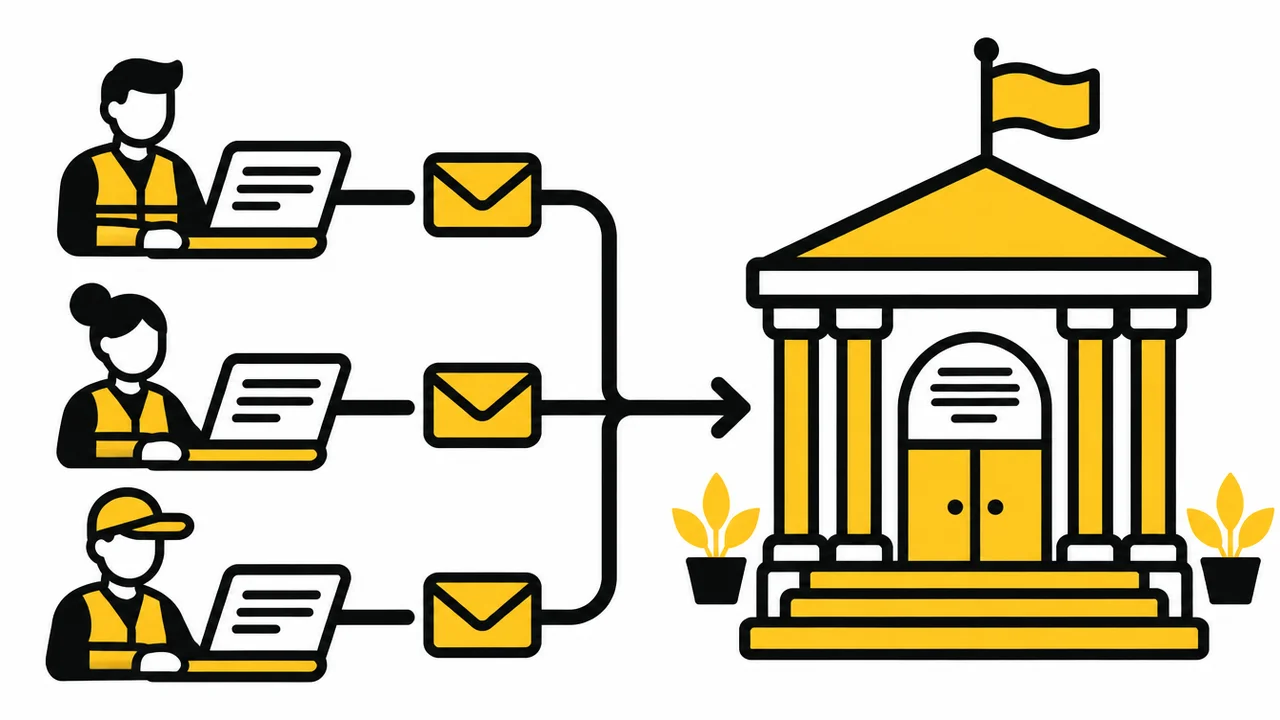
A council can also tender a set of routes as one contract. The Act describes two kinds of competitive procedure: an "open procedure", where anyone can bid in a single stage, and a "competitive flexible procedure", where the council designs its own stages. See Applying for a tender and how it is scored.
Direct awards
A council may award a contract directly only in the special cases the Act allows. Do not plan a business on one.

Where London councils publish
There is no single London portal. Each council names its own, so always follow the link in the council's own notice. These are examples, each from the council's or portal's own page.
- Bromley, Tower Hamlets and Hackney use the London Tenders Portal, run on the ProContract system. Bromley and Tower Hamlets say registration is free. Bromley says you choose the business categories you want email alerts for. Tower Hamlets uses it for contracts worth £100,000 a year or more.
- Lambeth uses EU Supply and says suppliers invited to tender for contracts of £100,000 or more register on it for free.
- Hammersmith and Fulham used the Capital eSourcing portal for its travel care taxi framework.
Portals and end dates change, so check each council's procurement page on the day you apply.
Find a Tender and Contracts Finder
Find a Tender is the government's central platform where public buyers publish notices. Searching is free and you can save searches. To bid you create a GOV.UK One Login, register your organisation as a supplier, enter your supplier information, and declare it. You can then create a share code to give a council's portal. Make a new one if your details change. Contracts Finder is the older government site for public contracts in England. Under the Act, a council publishes its notices for smaller contracts on the central digital platform instead, so search Find a Tender first.

Setting alerts
Save searches on Find a Tender and set alerts on each council portal for every name the work goes by: passenger transport, SEN or SEND transport, home to school, travel assistance, travel care, taxi, minicab. Keep the same company name, address and numbers on every portal as on your TfL licence and at Companies House.
Next, see The policies councils ask for.
Sources
- Procurement Act 2023, section 20 (competitive tendering procedures) - https://www.legislation.gov.uk/ukpga/2023/54/section/20/enacted (opens in a new tab)
- Procurement Act 2023, section 49 (open frameworks) - https://www.legislation.gov.uk/ukpga/2023/54/section/49/enacted (opens in a new tab)
- Procurement Act 2023, section 41 (direct award in special cases) - https://www.legislation.gov.uk/ukpga/2023/54/section/41/enacted (opens in a new tab)
- GOV.UK, Procurement Act 2023 guidance: dynamic markets - https://www.gov.uk/government/publications/procurement-act-2023-guidance-documents-define-phase/guidance-dynamic-markets-html (opens in a new tab)
- GOV.UK, Procurement Act 2023 guidance: transitional and saving arrangements (paragraph 19) - https://assets.publishing.service.gov.uk/media/68c92f0b5e09a4a59af0bf1c/Guidance_-_Transitional_and_Saving_Arrangements_FINAL_v4_pdf_links__.docx.pdf (opens in a new tab)
- GOV.UK, how to register your organisation on Find a Tender - https://gov.uk/government/publications/procurement-act-2023-short-guides/suppliers-how-to-register-your-organisation-and-first-administrator-on-find-a-tender-in-three-easy-steps-html (opens in a new tab)
- Find a Tender - https://www.find-tender.service.gov.uk/ (opens in a new tab)
- Contracts Finder - https://www.contractsfinder.service.gov.uk/ (opens in a new tab)
- GOV.UK, Procurement Act 2023 guidance: below-threshold contracts - https://assets.publishing.service.gov.uk/media/668bffb17541f54efe51bba1/Guidance_-_Below_Threshold_FINAL.pdf (opens in a new tab)
- Bromley, instructions for tenderers on how to use ProContract - https://www.bromley.gov.uk/downloads/file/835/instructions-for-tenderers-on-how-to-use-procontract (opens in a new tab)
- Tower Hamlets, Selling to Tower Hamlets - https://www.towerhamlets.gov.uk/lgnl/business/tenders_and_contract/Tender-opportunities.aspx (opens in a new tab)
- Lambeth, Register to sell to the council - https://www.lambeth.gov.uk/about-council/selling-services-council/register-sell-council (opens in a new tab)
- Hammersmith and Fulham, Travel Care Taxi Framework Award report - https://democracy.lbhf.gov.uk/documents/s131798/Travel%20Care%20Taxi%20Framework%20Award.pdf (opens in a new tab)
- Hackney, Community Reablement at Home Pilot notice on Find a Tender (names London Tenders Portal / ProContract) - https://www.find-tender.service.gov.uk/Notice/018563-2026 (opens in a new tab)
Checked on 28 October 2026
This is general guidance, checked against the official sources on the date shown. It is not legal, tax or insurance advice: check your own position with TfL, HMRC, your insurer or a solicitor.